Friday, May 6, 2011

Blair's Educational Legacy: Thirteen Years of New Labour


BLAIR’S EDUCATIONAL LEGACY: THIRTEEN YEARS OF NEW LABOUR

Edited by Anthony Green
Palgrave Macmillan (December 2010)
ISBN: 978-0-230-62176-3, ISBN10: 0-230-62176-7,
5-1/2 x 8-1/4 inches, 244 pages

Providing an overview and Marxist assessment of Tony Blair and New Labour's U.K. education policies, structures, and processes, the contributors in this exciting new collection discuss specific aspects of education policy and practices. This examination is set against the changing political and economic contexts of the British state’s responses to global and neo-liberal pressures.

Central themes include: New Labour and the education market state; New Labour, education, and ideology; and totality and open Marxism.

Green's work marks a timely contribution to Marxist analysis and Left critical assessment and is the first such collection addressing New Labour education policy.

Anthony Green is Senior Lecturer in the Department of Educational Foundations and Policy Studies at the Institute of Education, University of London. He co-convenes Marxism and Education Renewing Dialogues (MERD), and is Series Editor for the Palgrave Macmillan Marxism and Education Series.

CONTENTS:
Introduction: Anthony Green * All the Wrong Answers: Labour’s Corporate-Centred Education Initiatives--Kevin Farnsworth * The Knowledge-based Economy and the Transformation of Higher Education: Issues concerning enclosing and protecting the intellectual commons--Molly Bellamy * The Professional Imagination: Further Education Professionalism in and beyond a Neo-liberal Context--Denis Gleeson * The Privatisation of Education Phase II: Perspectives on state schools the private sector and ten years of a Labour government--Thakir Hafid * Management and Governance of the School System--Richard Hatcher * City: Academies, Alienation, Economism and Contending Forces for Change--Philip Woods * Curriculum Change in the Blair Years--Terry Wrigley * Education still make you sick under Gordon Brown, Innit?--Martin Allen & Patrick Ainley * Ten Years of Education Policy and ‘Race’ Inequality: Whiteness or Neo-liberal Practice?--Alpesh Maisuria * Gendered Practices in Education--Rosalyn George & John Wadsworth

Blair’s Educational Legacy (at Palgrave Macmillan): http://us.macmillan.com/blairseducationallegacy

Palgrave Macmillan Marxism and Education Series: http://www.palgrave.com/products/series.aspx?s=ME

Blair’s Educational Legacy (at Amazon.co.uk): http://www.amazon.co.uk/Blairs-Educational-Legacy-Thirteen-Education/dp/0230621767/ref=sr_1_13?s=books&ie=UTF8&qid=1304672910&sr=1-13

Blair’s Educational Legacy (at Amazon.com): http://www.amazon.com/Blairs-Educational-Legacy-Thirteen-Education/dp/0230621767/ref=sr_1_10?s=books&ie=UTF8&qid=1304673063&sr=1-10

Posted here by Glenn Rikowski
All that is Solid for Glenn Rikowski: http://rikowski.wordpress.com
The Flow of Ideas: http://www.flowideas.co.uk
MySpace Profile: http://www.myspace.com/glennrikowski
The Ockress: http://www.theockress.com/
Glenn Rikowski on Facebook at: http://www.facebook.com/glenn.rikowski

Tuesday, April 19, 2011

Marx and Education: Misleading Title and Confusing Narrative


MARX AND EDUCATION: MISLEADING TITLE AND CONFUSING NARRATIVE

April 13th 2011
By m310 - See all my reviews (on Amazon.com)
Review at Amazon.com: Marx and Education (Routledge Key Ideas in Education) (Paperback)

This had the potential to be a book that shed important light on the Marxist educational tradition; however, I was confused by the narrative. The title misled me into believing that I was in for a discussion of Marxist educators. Originally, I was interested in the book because I hoped it would augment the writings of U.S. Marxists, such as Ramin Farahmandpur, Rich Gibson, E. Wayne Ross, and a few others. Yet the book is dedicated to neo-Marxists, and while she gives attention to McLaren as a progressive educator (mid-1980s), she provides scant attention to his Marxist writings. Those who have read any of McLaren’s writings since 1995 know that he is a Marxist-Humanist; he is clearly not a neo-Marxist. Anyone following Marxism in education in the US would be hard pressed to find a more prominent and influential exponent than McLaren.

Furthermore, the significant contributions made upon U.S. Marxists by British Marxists such as Glenn Rikowski, Paula Allman, Dave Hill, and Mike Cole, are not highlighted. Why were there no significant discussions of Valerie Scatamburlo D'Annibale and Deb Kelsh? The narrative in this book is not so much about Marxist educators but rather progressive and neo-Marxist educators. Where were discussions of contributions of John Holst and Himani Bannerji? The book, Marxism Against Postmodernism in Educational Theory – a milestone in the debates over Marxism and education – was not even mentioned. This truly was a narrow reading of a very small field and as a result has shortchanged its readers. Mike Cole's work in England is far superior.

Anyon has done good work on urban education, but needs to be more aware of what is happening in the Marxist arena as far as education is concerned. I like her basic summary of Marxist analysis but wanted to find out more about U.S.-based Marxist educators, especially since there are so few of them.

Posted here by Glenn Rikowski
The Flow of Ideas: http://www.flowideas.co.uk
All that is Solid for Glenn Rikowski: http://rikowski.wordpress.com
Cold Hands & Quarter Moon: http://www.myspace.com/coldhandsmusic

Friday, March 18, 2011

14th Marxism and Education: Renewing Dialogues (MERD) Seminar


14th MARXISM AND EDUCATION: RENEWING DIALOGUES (MERD) SEMINAR

Understanding the Current Crisis in Higher Education
MARXISM AND EDUCATION: RENEWING DIALOGUES XIV
A Day Seminar

10.30 – 4.30
Saturday April 9th 2011
Institute of Education, University of London
20 Bedford Way, WC1
Room 828

Speakers to include:
Patrick Ainley, Martin Allen, Sarah Amsler, Joyce Canaan, Clyde Chitty, Chris Knight

The seminar is free but places are limited.

To reserve a place and receive a numbered ticket, please contact Alpesh Maisuria at: amaisuria@ioe.ac.uk
A waiting list will come into operation when all the places have been allocated.

Please forward this invite to those who may be interested.

Convenors: Tony Green and Alpesh Maisuria

The MERD Seminars were co-founded by Tony Green and Glenn Rikowski in 2001. The First MERD Seminar took place at the University of London, Institute of Education on 22nd October 2002. For details of the first ten MERD Seminars, see: http://www.flowideas.co.uk/?page=events&sub=MERD

---END---

‘I believe in the afterlife.
It starts tomorrow,
When I go to work’
Cold Hands & Quarter Moon, ‘Human Herbs’ at: http://www.myspace.com/coldhandsmusic (recording) and http://www.youtube.com/watch?v=2h7tUq0HjIk (live)

Posted here by Glenn Rikowski
All that is Solid for Glenn Rikowski: http://rikowski.wordpress.com
The Flow of Ideas: http://www.flowideas.co.uk
MySpace Profile: http://www.myspace.com/glennrikowski
The Ockress: http://www.theockress.com/
Rikowski Point: http://rikowskipoint.blogspot.com

Friday, January 21, 2011

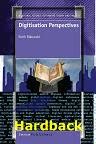
Invitation to a Book Launch for 'Digitisation Perspectives'


INVITATION TO A BOOK LAUNCH FOR ‘DIGITISATION PERSPECTIVES’


Digitisation Perspectives
Edited by Ruth Rikowski
Sense Publishers, Rotterdam, The Netherlands, 2011

ISBN 978-94-6091-297-9 (pbk); 978-94-6091-6 (hdbk);
978-94-6091-299-3 (e-book)
£35.00 (pbk); £75.00 (hdbk)
https://www.sensepublishers.com/product_info.php?products_id=1158&osCsid=f255a6ffa2e20417688cf96c4ae8976e

Part of Book Series:
‘Educational Futures: Rethinking Theory and Practice’
Series Editor: Michael A. Peters

Digitisation Perspectives will be launched on Wednesday 16th February 2011, 17.30 - 20.00
At: Wilkins Terrace Restaurant
University College London
Gower Street
London, WC1E 6BT, England

Digitisation Perspectives includes contributions from 22 experts worldwide.

Foreword by Simon Tanner, Director Digital Consultancy, King’s College London, who says that the book: “…seeks to address and answer some of the big questions of digitisation…It succeeds on many levels…”

Topics covered include: electronic theses, search engine technology, digitisation of ancient manuscripts, citation indexing, reference services, digitisation in Africa, the Scholarly Publishing and Academic Resources Coalition, new media and scholarly publishing. The final chapter explores virtual libraries, posing some interesting questions for possible futures.

TABLE OF CONTENTS:

FOREWORD: SIMON TANNER, DIRECTOR, KING’S DIGITAL CONSULTANCY SERVICES, KING’S COLLEGE, LONDON

INTRODUCTION: RUTH RIKOWSKI

PART 1: BACKGROUND AND OVERVIEW TO DIGITISATION AND DIGITAL LIBRARIES

Chapter 1: The Rise of Digitization: An Overview - Melissa M. Terras
Chapter 2: Digital Libraries and Digitisation: an overview and critique –
Ruth Rikowski
Chapter 3: Digital Knowledge Resources – M. Paul Pandian
Chapter 4: Digitisation: research, sophisticated search engines, evaluation: all that and more – Ruth Rikowski


PART 2: DIGITISATION AND HIGHER EDUCATION

Chapter 5: Improving student mental models in a new university information setting – Alan Rosling and Kathryn Chapman
Chapter 6: Electronic Theses and Dissertations: promoting ‘hidden’ research – Susan Copeland
Chapter 7: Learning Systems in Post-Statutory Education – Paul Catherall
Chapter 8: Going Digital: the transformation of scholarly communication and academic libraries – Isaac Hunter Dunlap


PART 3: DIGITISATION AND INEQUALITIES

Chapter 9: Hegemony and the Web: the Struggle for Hegemony in a Digital Age – Tony Ward
Chapter 10: Digital libraries: an opportunity for African education – Dieu Hack-Polay
Chapter 11: Critical Perspectives on Digitising Africa – by Leburn Rose


PART 4: DIGITAL LIBRARIES, REFERENCE SERVICES AND CITATION INDEXING

Chapter 12: Digital Library and Digital Reference Service: integration and mutual complementarity – Jia Liu
Chapter 13: The New Generation of Citation Indexing in the Age of Digital Libraries – Mengxiong Liu and Peggy Cabrera


PART 5: DIGITISATION OF RARE, VALUED AND SCHOLARLY WORKS

Chapter 14: Building the Virtual Scriptorium – Tatiana Nikolova-Houston and Ron Houston
Chapter 15: SPARC: creating innovative models and environments for scholarly research and communication – Heather Joseph
Chapter 16: Impacts of New Media on Scholarly Publishing – Yehuda E. Kalay


PART 6: FUTURISTIC DEVELOPMENTS OF DIGITISATION

Chapter 17: Meeting and Serving Users in Their New Work (and Play) Spaces – Tom Peters
Chapter 18: Virtual Libraries and Education in Virtual Worlds: twenty-first century library services – Lori Bell, Mary-Carol Lindbloom, Tom Peters and Kitty Pope

CONCLUSION: RUTH RIKOWSKI

Cover designed by Victor Rikowski

Refreshments provided.

Confirmed speakers at the launch include:

An Introduction by Andy Dawson, Senior Teaching Fellow and MSc Information Science Programme Director, Department of Information Studies, UCL.

Ruth Rikowski is a Freelance Editor, commissioning books for Chandos Publishing, Oxford. She is an Associate of the Higher Education Academy and a Chartered Librarian. Ruth Rikowski is the author of Globalisation, Information and Libraries (Oxford: Chandos Publishing, 2005) and the editor of Knowledge Management: social, cultural and theoretical perspectives (Oxford: Chandos Publishing, 2007). She has also written numerous articles and given many talks; focusing in particular on the topics of globalisation, knowledge management and information technology. Ruth Rikowski is on the Editorial Board of Policy Futures in Education and Information for Social Change. The Rikowski website, ‘The Flow of Ideas’ can be found at www.flowideas.co.uk and her blog, ‘Ruth Rikowski Updates’ is at http://ruthrikowskiupdates.blogspot.com/

Paul Catherall is a librarian currently working at University of Liverpool, UK. Paul has worked in E-Learning and technical support roles over a number of years and his current role involves providing library services to students studying online. Paul also worked for several years as a college lecturer in Information Communications Technology. Paul is also undertaking a PhD within the area of E-Learning and is a graduate of Glyndŵr University, formerly the North East Wales Institute of Higher Education (B.A.) and John Moores University (M.A. Dist). Paul is also an associate of the Higher Education Academy and chartered member of Chartered Institute of Library and Information Professionals (CILIP). Paul has also been active in various CILIP affiliated groups, including the Career Development Group and is a member of the Editorial Board for the collective forum and journal Information for Social Change. Paul has authored various published journal articles and texts including a stand-alone book Delivering E-Learning for Information Services in Higher Education (Chandos 2005).

Julianne Nyhan – on behalf of Melissa Terras, who is a Senior Lecturer in Electronic Communication in the Department of Information Studies, University College London, and the Deputy Director of the UCL Centre for Digital Humanities. With a background in Classical Art History and English Literature, and Computing Science, her doctorate (University of Oxford) examined how to use advanced information engineering technologies to interpret and read the Vindolanda texts. She is a general editor of DHQ (Digital Humanities Quarterly) and Secretary of the Association of Literary and Linguistic Computing. Her research focuses on the use of computational techniques to enable research in the arts and humanities that would otherwise be impossible.

Places limited for the book launch: R.S.V.P: Rikowskigr@aol.com

Purchasing Digitisation Perspectives:

From Sense Publishers:

Paperback: https://www.sensepublishers.com/product_info.php?products_id=1158&osCsid=6db6323c10ad4cd5490353b1a892f650

Hardback: https://www.sensepublishers.com/product_info.php?products_id=1159&osCsid=6db6323c10ad4cd5490353b1a892f650

From Amazon.co.uk:

Paperback: http://www.amazon.co.uk/Digitisation-Perspectives-Ruth-Rikowski/dp/9460912974/ref=sr_1_5?s=books&ie=UTF8&qid=1295640711&sr=1-5

Hardback: http://www.amazon.co.uk/Digitisation-Perspectives-Ruth-Rikowski/dp/9460912982/ref=sr_1_6?s=books&ie=UTF8&qid=1295640711&sr=1-6

From Amazon.com:

Paperback: http://www.amazon.com/Digitisation-Perspectives-Ruth-Rikowski/dp/9460912974/ref=sr_1_2_title_0_main?s=books&ie=UTF8&qid=1295640919&sr=1-2

Hardback: http://www.amazon.com/Digitisation-Perspectives-Ruth-Rikowski/dp/9460912982/ref=sr_1_2_title_1_h?s=books&ie=UTF8&qid=1295640919&sr=1-2

Posted here by Glenn Rikowski
All that is Solid for Glenn Rikowski: http://rikowski.wordpress.com
The Flow of Ideas: http://www.flowideas.co.uk/
Volumizer: http://glennrikowski.blogspot.com/

Sunday, December 12, 2010

The Speed of Life


THE SPEED OF LIFE

Ten years ago, Michael Neary and I wrote a paper for the British Sociological Association Annual Conference 2000 called The Speed of Life: The significance of Karl Marx’s concept of socially necessary labour time. The paper was selected by the BSA’s Publications Committee for inclusion in the annual ‘book of the conference’ for 2000.

We revised and edited our paper, and it came out as Time and Speed in the Social Universe of Capital, in Social Conceptions of Time: Structure and Process in Work and Everyday Life, edited by Graham Crow and Sue Heath (Palgrave Macmillan, 2002).

See Amazon.co.uk:
http://www.amazon.co.uk/Social-Conceptions-Time-Explorations-Sociological/dp/0333984994/ref=sr_1_1?s=books&ie=UTF8&qid=1292087985&sr=1-1

And

Amazon.com:
http://www.amazon.com/Social-Conceptions-Time-Structure-Everyday/dp/0333984994/ref=sr_1_1?s=books&ie=UTF8&qid=1292088141&sr=1-1

In addition, our original paper was also put out on The Flow of Ideas website on 13th May 2006. It is in two parts.

Recently, the journal Principia Dialectica has alerted folks to our original paper at The Flow of Ideas on their blog. The relevant post is called ‘Marx, Einstein, Postone...’ and was posted to the Principia Dialectica blog on 1st December 2010. This has led to a lot of traffic going to the original paper posted to The Flow of Ideas in 2006. However, the link provided there does not work, so people have been coming to the paper by other means (including a general link given for The Flow of Ideas in the Principia Dialectica blog’s ‘Links’ section).

Thus, to make it easier for people to get to our original paper I have included the working link (and full reference) here, as:

Neary, M. & Rikowski, G. (2000) The Speed of Life: The significance of Karl Marx's concept of socially necessary labour-time, a paper presented at the British Sociological Association Annual Conference 2000, 'Making Time - Marking Time', University of York, 17 -20 April, online at:
http://www.flowideas.co.uk/?page=articles&sub=Speed%20of%20Life%20-%20Part%20One

The Principia Dialectica blog home page is at:
http://www.principiadialectica.co.uk/blog/

The page with their blog about our paper, ‘Marx, Einstein and Postone...’ is at:
http://www.principiadialectica.co.uk/blog/?author=1&paged=2

Glenn Rikowski

The Flow of Ideas:
http://www.flowideas.co.uk
All that is Solid for Glenn Rikowski:
http://rikowski.wordpress.com

Saturday, December 4, 2010

Historical Materialism and Functional Explanation - an essay by Alexander Rikowski


HISTORICAL MATERIALISM AND FUNCTIONAL EXPLANATION – AN ESSAY BY ALEXANDER RIKOWSKI

Does historical materialism need to appeal to functional explanation? If not, how can historical materialism otherwise be made consistent? If so, is this a strength or a weakness?

Alexander Rikowski

An essay written as an undergraduate in the Department of Philosophy, King’s College London

London, June 2010

This essay by Alexander Rikowski can be viewed at:

Rikowski, G. (2010) Historical Materialism and Functional Explanation, an essay written as an undergraduate in the Department of Philosophy, King’s College London, June, online at: http://www.flowideas.co.uk/index.php?page=articles&sub=Historical%20Materialism%20and%20Functional%20Explanation


Posted here by Glenn Rikowski
The Flow of Ideas:
http://www.flowideas.co.uk

All that is Solid for Glenn Rikowski: http://rikowski.wordpress.com

Marx, Capitalism and Justice - an essay by Alexander Rikowski


MARX, CAPITALISM AND JUSTICE

Marx did not think that capitalism is unjust, and, in fact, said that it is just.’ Discuss.

Alexander Rikowski

An essay written as an undergraduate in the Department of Philosophy, King’s College London

This essay on ’Marx. Capitalism and Justice’ by Alexander Rikowski can be viewed at:
Rikowski, A. (2010) Marx, Capitalism and Justice, an essay written as an undergraduate in the Department of Philosophy, King’s College London, June, online at:
http://www.flowideas.co.uk/index.php?page=articles&sub=Marx%20and%20Justice


Posted here by Glenn Rikowski
The Flow of Ideas:
http://www.flowideas.co.uk